



purpose driven business

How to Build a Brave, Meaningful, and Unforgettable Brand without Chasing Algorithms

In a world that often feels loud and uncertain, it can be tempting to shrink, to stay neutral, or to avoid rocking the boat.

But as business owners, it's time to dial up, not tone down.

When I work with brands, I remind them: the most impactful brands today aren’t the loudest, they’re the clearest. And clarity comes from strong values - lived, shared, and unapologetically shown.

I recently read this quote and it stuck with me.

“You can't be what you can't see, and you can't see what isn't shared.”

So, how do we step into that brave, visible space?

Let's take inspiration from two artists who embody courageous marketing and authentic branding: Doechii and Little Simz.

Photo credit - Karen Staniland-Platt

3 Ways to Make Your Marketing More Meaningful, Courageous, and Brave

1. Define Your Own Brand: Be Unapologetically You

I love that Doechii shows up in her full spectrum. She’s real, soft, strong, vulnerable and honest. She's not asking for permission in fact; she's created her own category. This is a powerful lesson for your social media presence as a small business.

Make it Practical: Your brand is not the algorithm. Don't let fleeting trends dictate your identity.

👉 Tip: Focus on building relationships by sharing what makes you you, not just what you think will get the most likes. And do that consistently, so you’re building a recognisable and unforgettable brand by being real, dynamic, and your whole self in every piece of content you create.

2. Make Your Ethics Visible: Live Your Values Out Loud

It's one thing to list your values in your "About Us" section, but are they truly guiding your decisions? Little Simz's lyrics, visuals, and business choices are her activism. Her values aren't just pretty words; they are embodied.

Make it Practical Your ethical branding should be visible in every aspect of your business. This means your values should inform:

  • Who you collaborate with.

  • How you treat your customers.

  • The causes you choose to support.

  • How you choose to show up, even when you feel misunderstood.

👉 Tip: Audit your brand touchpoints and ask: Is this aligned with my values? If not, rewrite it, redesign it, or let it go.

3. Celebrate the Process & start Connecting with Your True Fans

People don't just buy what you sell; they buy what you stand for. Over 70% of consumers are choosing to shop from brands who share their values. Both Little Simz and Doechii don't chase every trend; they're experimental, carefully curating their brand, and crucially, they bring their audience along for the journey, even the messy bits. They’re not on the hunt for new fans, they want to appeal to their true fans.

Make it Practical: You don't need to appeal to everyone, just the right people – your "true fans." By sharing your process, your struggles, and your triumphs, you build deep customer connection, ambassadors for your business. Focus on identifying your ideal customers and serving them exceptionally well. This authentic storytelling builds loyalty far beyond any marketing budget.

👉 Tip: Be experimental to start building real connection and trust. Share your journey — the behind-the-scenes, the missteps, the breakthroughs, the every day and keep the conversations going in DMs, email marketing or Stories on Instagram.

Be the Example

That story you're scared to tell, that pivot you're unsure how to share – that's your connection point. Your audience is probably going through the same thing. By strategically sharing, they will start to see feel seen and stay because they’re curious to learn more.

WHY IT MATTERS NOW

Crafting storytelling strategies that empower purpose-driven brands and leaders to do good, for people and for the planet is my super power.

I’m on a mission to make marketing meaningful again.

Because when we market with meaning, we don’t just make sales, we shift perspectives and create movements. And it matters…

This world can feel like it’s running on chaos and caffeine. As brands who care, not showing up might actually be the riskiest move of all.

When you stand up and share your values, your story, and your vision, you aren’t just marketing, you’re leading.

You’re creating space for others to do the same. You’re proving that under-represented business owners are visibly building ethical, powerful, unapologetic brands — and winning.

Remember: "You can’t be what you can’t see and you can’t see what isn’t shared."

So whether you’re launching a new product, telling your story online, or simply deciding to stop playing small, create content that you care about and that others can fan girl over too!

Ready to make your marketing truly impactful and aligned with your purpose?
Let's chat

5 Ways to Be Braver in Business

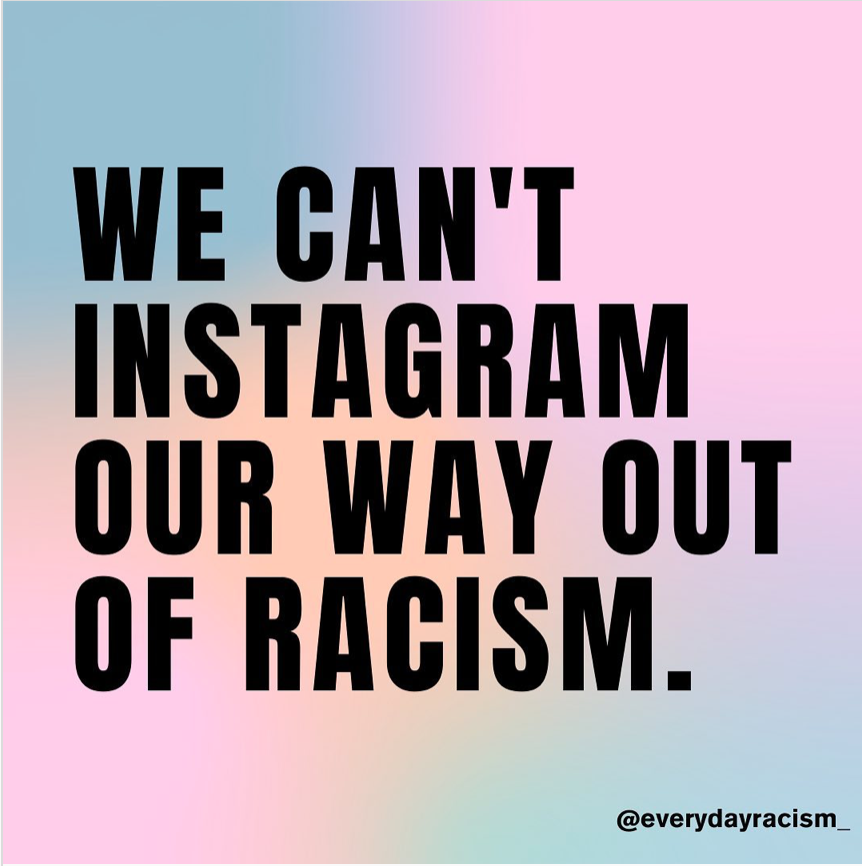
Do you remember 2020? When tons of little black squares flooded social media in “solidarity”? When the world collectively went silent and shared their outrage at the murder of George Floyd on Black Out Tuesday?

Image credit - Taken from this brilliant post from Every Day Racism’s Instagram Profile

Image credit - Taken from this brilliant post from Every Day Racism’s Instagram Profile

According to Forbes, over 28 million Instagram users participated in #BlackoutTuesday — collectively posting empty black tiles. For the first time in decades, brands, organisations and individuals collectively took a stand to drive change.

2020 is arguably the year of the 21st Century for global activism and honestly, it seems to be a great thing. The last year and certainly events in recent months have left me wondering … does activism have a place in business?

I’ve seen this managed successfully by some of the bigger brands and dismally by others.


Brands like Dove, Nike and Heineken for instance, have taken a public stance on social issues from the environment, politics, gender issues, racism and in the case of HSBC even Brexit.

But what does Brand Activism mean? 

Brand activism is when a brand takes a stand to help drive change to help solve the most urgent problems facing society (social, economic, environmental or political) — based on its own beliefs, purpose and values. It isn’t a new concept, however with the rise of conscious consumerism, companies are noticing that by stepping away from the fence, they can broaden their reach and drive sales.

We’ve seen this nearer to home too. In the wake of Marcus Rashford’s child poverty campaign, smaller independent businesses and charities were galvanised to provide free school meals to struggling families last year. It led to overwhelming consumer support for participating restaurants & charities during lockdown and eventually a U-turn from the UK government on it’s decision not to fund holiday feeding schemes.

Do consumers care?

According to Sprout Social, 70% of consumers feel it’s important for brands to take a stand on public issues, a sentiment that’s grown 6% from 2017. 

Edelman’s Trust Barometer also finds 81% of consumers say they expect brands to do the right thing, and 71% say that placing profit before people will lose their trust forever. Generation Z are voting with their wallets for businesses that are authentically purpose driven. Gen Z Believes in it’s own power to make change and are expecting companies to lead the way.

Blog Banner images-2.png

Generation Z uses social media not only to learn about issues, but to make a meaningful difference. 91 percent say they use social media to learn about and participate in issues they care about

BBMG and GlobeScan asked more than 27,000 people across 27 international markets to share their experiences over the last year and the report highlights that young people under age 30 are more likely to reward brands when they take meaningful action.

They’re looking to their peers. Think about the impact of historic moments led by US Olympic gymnast Simone Biles, Grand Slam Tennis champion Naomi Osaka, and Climate Campaigner Greta Thunberg to move the world to a different way of taking action.

Believe me when I say that I’m not advocating that businesses should all grab their megaphones and publicly share their views on issues. Instead can you share your values in a way that is effective and that will bring about real change?

MY TOP 5 TIPS TO BUILDING BRAND AUTHENTICITY

Consumers can see through activism that is performative. Brand activism needs to be authentic and businesses need to ensure they are not ‘purpose washing’ or ‘jumping on the bandwagon’ of a cause that appears popular and trendy. The odd comment, like or share on your social media does not translate as brand activism. 

My advice to business is to make sure that your business values align with the purpose and causes you support. It is not an easy thing to address, but here are some strategic steps to explore beforehand:

1. Start internally

Think about the key social issues you care about and how it fits or does not fit with your stated corporate values. Involve colleagues, co-workers and, if you are a sole trader, your friends and influencers in discussions to make sure your internal values are aligned to your public statements.

2. Define your purpose

Do not try and tackle everything at once, you’re bound to drop the ball. Start by choosing one cause you’d like to focus on, and from there, you can then expand as you gain credibility.

3. Air your dirty laundry

In other words, be authentic. Admit when you’ve been wrong in the past. It’s better to reflect on when you’ve done wrong and have a plan to change than to cover it up with performative activism.

4. Research. Research. Research.

Understand the complexities. Team up with a charity or not-for-profit organisation, work with them to understand the complexities that exist surrounding the issues you are compassionate about. By doing so, you’re able to identify which area, within the cause, you want to channel your activism. This can focus your attention and help you to define your area of impact. 

Don’t forget to be strategic in your approach and identify the potential risks. Do your research so that you are clear about the factors that will impact your ability to facilitate change. Anticipate mistakes and put in place feedback facilities so that you can quickly respond. Keep doing this, so that your approach evolves along with your business practices.

5. Show some results

Turn your purpose into action. Empower Others, Not Yourself! Remember that business activism around social change is not about gaining press coverage or increasing profits. The impetus should be influencing change for your wider community and the world at large.

One way you can do this, is to work with people of influence, people of extensive knowledge in the area - staff, colleagues, board members, associates, partners, consumers - ensuring you come together with aligned values and share a commonality in what you’re trying to achieve.

ITS OKAY TO BE NERVOUS

Blog Banner images.png

Again, brand activism may not be for everyone, but statistics have found that when consumers think a brand has a strong purpose, they are 4.1 times more likely to trust the company

When brand activism is done well, it becomes a genuine and authentic extension of the company culture and business values are not only advocated by leadership teams, but wider employees too. 

I personally think that activism does have a place in business. It helps to attract talent, attract partnerships, attract investment and attract sales. For it to be sustainable, it requires real commitment from the top down to infuse the essence of the cause into every facet of the organisation, including marketing.

It empowers every part of the organisation to do their part in making right, even in a small way, some of the horrible injustices of this world.

It isn’t about political correctness or “woke”, it’s about being braver and making genuine connections with your customers.

People already care and it’s our job to make it easier for them to do so and take action.

Ready to discuss your purpose?