Social Media

TikTok or Instagram, which is better for your brand?

TikTok or Instagram, which is better for your brand?

This blog explores the battle lines drawn between Instagram and TikTok, and which short-form video channel may be better for your brand? Who is winning social media popularity in 2022? TikTok is the most downloaded social media app and though only third behind Facebook and Instagram, continues to grow at an astronomical rate. Are you missing a trick?

5 Ways to Be Braver in Business

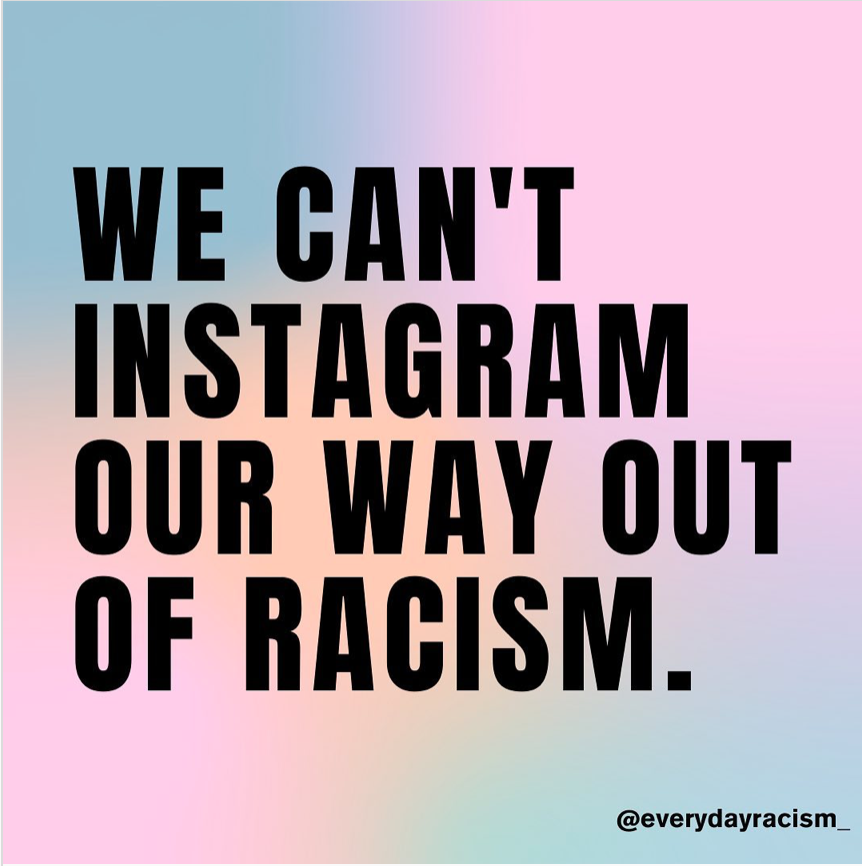
Do you remember 2020? When tons of little black squares flooded social media in “solidarity”? When the world collectively went silent and shared their outrage at the murder of George Floyd on Black Out Tuesday?

Image credit - Taken from this brilliant post from Every Day Racism’s Instagram Profile

Image credit - Taken from this brilliant post from Every Day Racism’s Instagram Profile

According to Forbes, over 28 million Instagram users participated in #BlackoutTuesday — collectively posting empty black tiles. For the first time in decades, brands, organisations and individuals collectively took a stand to drive change.

2020 is arguably the year of the 21st Century for global activism and honestly, it seems to be a great thing. The last year and certainly events in recent months have left me wondering … does activism have a place in business?

I’ve seen this managed successfully by some of the bigger brands and dismally by others.


Brands like Dove, Nike and Heineken for instance, have taken a public stance on social issues from the environment, politics, gender issues, racism and in the case of HSBC even Brexit.

But what does Brand Activism mean? 

Brand activism is when a brand takes a stand to help drive change to help solve the most urgent problems facing society (social, economic, environmental or political) — based on its own beliefs, purpose and values. It isn’t a new concept, however with the rise of conscious consumerism, companies are noticing that by stepping away from the fence, they can broaden their reach and drive sales.

We’ve seen this nearer to home too. In the wake of Marcus Rashford’s child poverty campaign, smaller independent businesses and charities were galvanised to provide free school meals to struggling families last year. It led to overwhelming consumer support for participating restaurants & charities during lockdown and eventually a U-turn from the UK government on it’s decision not to fund holiday feeding schemes.

Do consumers care?

According to Sprout Social, 70% of consumers feel it’s important for brands to take a stand on public issues, a sentiment that’s grown 6% from 2017. 

Edelman’s Trust Barometer also finds 81% of consumers say they expect brands to do the right thing, and 71% say that placing profit before people will lose their trust forever. Generation Z are voting with their wallets for businesses that are authentically purpose driven. Gen Z Believes in it’s own power to make change and are expecting companies to lead the way.

Blog Banner images-2.png

Generation Z uses social media not only to learn about issues, but to make a meaningful difference. 91 percent say they use social media to learn about and participate in issues they care about

BBMG and GlobeScan asked more than 27,000 people across 27 international markets to share their experiences over the last year and the report highlights that young people under age 30 are more likely to reward brands when they take meaningful action.

They’re looking to their peers. Think about the impact of historic moments led by US Olympic gymnast Simone Biles, Grand Slam Tennis champion Naomi Osaka, and Climate Campaigner Greta Thunberg to move the world to a different way of taking action.

Believe me when I say that I’m not advocating that businesses should all grab their megaphones and publicly share their views on issues. Instead can you share your values in a way that is effective and that will bring about real change?

MY TOP 5 TIPS TO BUILDING BRAND AUTHENTICITY

Consumers can see through activism that is performative. Brand activism needs to be authentic and businesses need to ensure they are not ‘purpose washing’ or ‘jumping on the bandwagon’ of a cause that appears popular and trendy. The odd comment, like or share on your social media does not translate as brand activism. 

My advice to business is to make sure that your business values align with the purpose and causes you support. It is not an easy thing to address, but here are some strategic steps to explore beforehand:

1. Start internally

Think about the key social issues you care about and how it fits or does not fit with your stated corporate values. Involve colleagues, co-workers and, if you are a sole trader, your friends and influencers in discussions to make sure your internal values are aligned to your public statements.

2. Define your purpose

Do not try and tackle everything at once, you’re bound to drop the ball. Start by choosing one cause you’d like to focus on, and from there, you can then expand as you gain credibility.

3. Air your dirty laundry

In other words, be authentic. Admit when you’ve been wrong in the past. It’s better to reflect on when you’ve done wrong and have a plan to change than to cover it up with performative activism.

4. Research. Research. Research.

Understand the complexities. Team up with a charity or not-for-profit organisation, work with them to understand the complexities that exist surrounding the issues you are compassionate about. By doing so, you’re able to identify which area, within the cause, you want to channel your activism. This can focus your attention and help you to define your area of impact. 

Don’t forget to be strategic in your approach and identify the potential risks. Do your research so that you are clear about the factors that will impact your ability to facilitate change. Anticipate mistakes and put in place feedback facilities so that you can quickly respond. Keep doing this, so that your approach evolves along with your business practices.

5. Show some results

Turn your purpose into action. Empower Others, Not Yourself! Remember that business activism around social change is not about gaining press coverage or increasing profits. The impetus should be influencing change for your wider community and the world at large.

One way you can do this, is to work with people of influence, people of extensive knowledge in the area - staff, colleagues, board members, associates, partners, consumers - ensuring you come together with aligned values and share a commonality in what you’re trying to achieve.

ITS OKAY TO BE NERVOUS

Blog Banner images.png

Again, brand activism may not be for everyone, but statistics have found that when consumers think a brand has a strong purpose, they are 4.1 times more likely to trust the company

When brand activism is done well, it becomes a genuine and authentic extension of the company culture and business values are not only advocated by leadership teams, but wider employees too. 

I personally think that activism does have a place in business. It helps to attract talent, attract partnerships, attract investment and attract sales. For it to be sustainable, it requires real commitment from the top down to infuse the essence of the cause into every facet of the organisation, including marketing.

It empowers every part of the organisation to do their part in making right, even in a small way, some of the horrible injustices of this world.

It isn’t about political correctness or “woke”, it’s about being braver and making genuine connections with your customers.

People already care and it’s our job to make it easier for them to do so and take action.

Ready to discuss your purpose?

How to successfully sell on social media

In real life shopping experiences will never be the same again.

The pandemic has seen more and more people turn to online shopping. The knock on effect has meant many big name retailers sadly closing their doors, changing the face of the high street forever.

With IRL shopping experiences on hold, social media has quickly become a valuable revenue stream for retailers, brands, and small businesses worldwide.

And as more platforms adopt e-commerce tools to give consumers new, convenient, and highly-visual ways to shop from the brands they love, the importance of social commerce is only going to skyrocket.

Image via Pinterest

Image via Pinterest

Confused about social commerce?

Hootsuite describes social commerce as the process of selling products directly on social media and consumers are loving it.

The statistics from Smart Insights speak for themselves:

  • 87% of users turn to social media for help in making a shopping decision.

  • 1 in 4 business owners are selling through Facebook.

  • 40% of merchants use social media to generate sales.

  • 30% of consumers say they would make purchases directly through social media platforms.

But what makes social commerce so appealing for both consumers and brands alike, is that the online experience is the modern way to develop meaningful relationships with potential customers so your brand is the first to come to mind when they’re ready to buy.

Why choose to sell on social media?

Unlike shopping experiences via a website and especially during the pandemic, social media has allowed shopping to be social once more. For one, it’s more interactive. You can comment on an item you’ve seen, share it with a friend and get opinions before and after you buy. Buying directly on a social media platform like Instagram or Facebook also takes away those unnecessary steps you may have on a website, from clicking, then adding to cart, then paying. Now you can you can discover and purchase directly all in one space.

make the most of selling on each platform

Let’s start with Instagram:

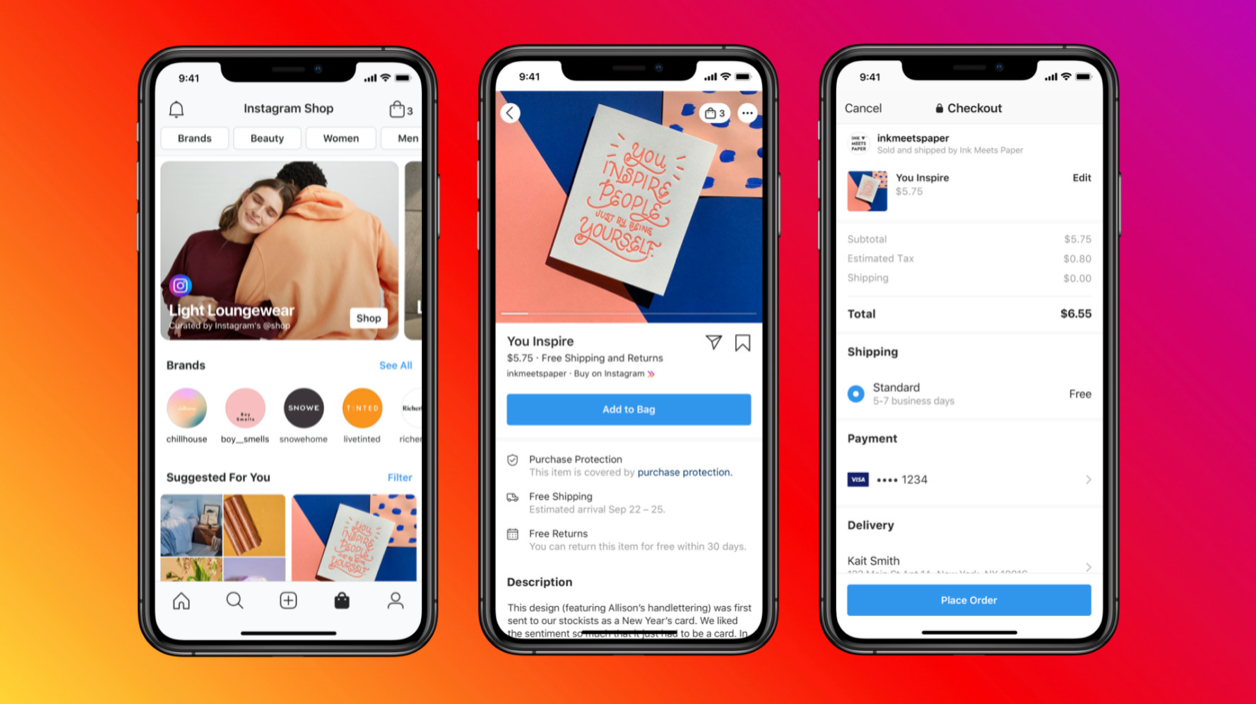
Instagram is one of the few platforms that offers multiple ways to sell online as both a product or service based business. With the introduction of Instagram Shops, it offers a great way for businesses to build a curated and completely personalised shopping experience. Shopping opportunities have been integrated in almost every part of the app, from feed posts and stickers in “Stories” to tags in “Instagram Reels”, “Guides”, “Lives” and “IGTV”. It’s a game changer for influencers to drive sales on behalf of brands. According to Forbes - 63% of social media users trust influencer recommendation.

Facebook:

Facebook was the earliest social media platform to build tools specifically for e-commerce and is still the biggest platform with over 2.7 billion monthly active users. Over 90 million small businesses use Facebook and its related products. There are options to sell via Facebook Marketplace, Facebook Shop and Messenger. Business owners can create a dedicated “shop” section on their Facebook Page and build a catalogue of products and services that visitors can browse, save, share, and even purchase. What Facebook offers which other platforms don’t, is the chance to build a community of online shoppers. Facebook also owns Instagram and WhatsApp, so you’re getting three platforms in one to sell your products and services.

Image via Facebook Business website

Image via Facebook Business website

Pinterest:

Pinterest is a visual discovery platform. It is perfect for reaching new, relevant audiences. Plus, the whole experience is fully clickable, making it easy to turn browsers into customers. According to a survey by Cowen and Company, 47% of social media users saw Pinterest as the platform for discovering and shopping for products – more than three times higher than Facebook or Instagram. Business owners have the option to create catalogues and create pins for products. Because it is a visual search engine, businesses would do well to have relevant tags and keywords to ensure they are discovered on the platform. Create boards that people would want to share and boost discoverability.

TikTok:

TikTok is the fastest growing social media platform and number one for trending content. It is also poised to be the next “big” social commerce platform thanks to the rollout of several new shopping features, including a recent announcement partnering with Shopify. It’s younger demographic makes it appealing to bigger brands. You can add e-commerce links to bios, “Shop Now” buttons for brands have been launched for video ads, and “Hashtag Challenges” are great e-commerce features which allows users to shop for products associated with a sponsored hashtag.

do more than just sell on social media

Engage with your followers

To create a great social commerce experience, you’ve got to remember the “social” part. Answer questions, offer value and interesting content, be human and authentic.

Listen to what your customers need

Keep a close eye on comments and shares on your Shop, and respond or offer customer service when necessary. This could be a be a great way to get feedback.

Encourage reviews

93% of online shoppers say a review can make or break their decision. If you’ve got a product people are happy with, get them to help spread the word. Whether it’s an automated follow-up email asking for a review after a product has been delivered, or incentives like a contest to encourage previous customers to weigh in and share their experience, collecting social proof is vital to building a positive reputation online. Share the reviews on social media or host a Live video or create a Reel with happy customers.

Remove those moments of friction

The easier you make the purchase process, the more likely someone will be to follow through. So what moments of friction or hesitation can you remove? Make sure the product description covers all the details. Integrate autofill options into the purchase process. Maybe even set up a chatbot to answer customer FAQs

Fundamentally, social commerce is just one piece of your overall marketing strategy

Create a strategy that engages, sells, and intrigues your audience so that you have the best chance at success, online or offline.

Not ready to set up Shop yet?

Promote your business locally, make sure your website is up to date. Create a Google My Business profile so customers’ can leave reviews, link up with local networking groups and connect with the local press.

Social media is an immensely powerful tool for retailers to use to sell their products. Now that it’s such a popular way to shop online, hardly anyone can argue it is unnecessary. Quite the opposite: social commerce is here to stay, even if we aren’t yet totally sure where it’s headed. The best we can do is be prepared.

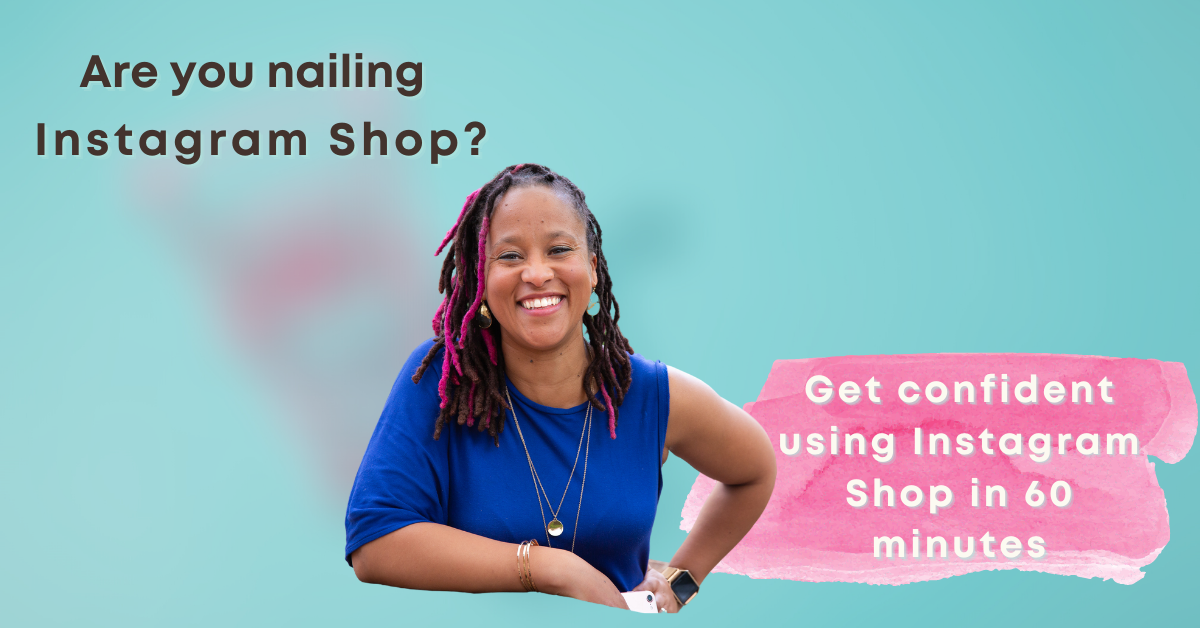
Find out more about my Instagram Shop Training or book in a power hour to unlock the best ways to boost your social media.